
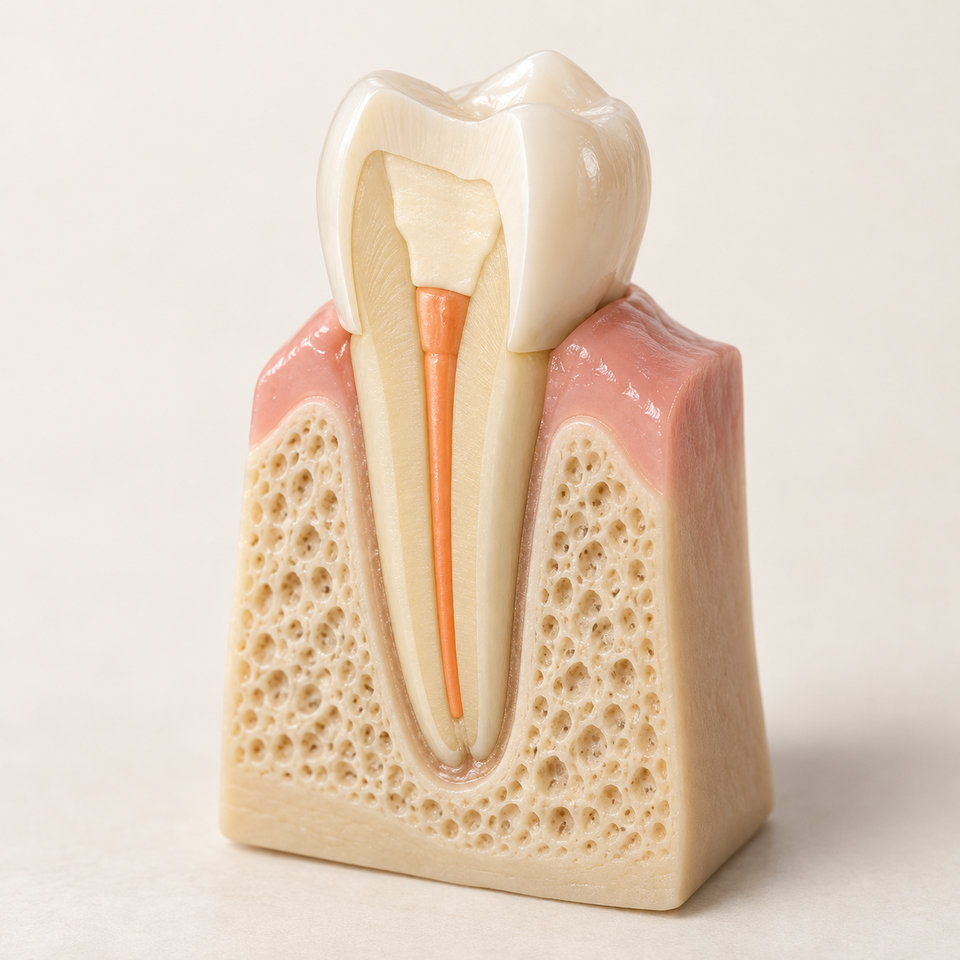
The soft tissue inside a tooth, called the pulp, can become infected after decay, damage or a crack. Root canal treatment removes the affected tissue, cleans the root canals and seals them to help retain the tooth.
Assessing the tooth
We examine the tooth and take appropriate X-rays before discussing your options. We’ll explain whether root canal treatment is suitable, the outlook for the tooth and any alternatives, including extraction.
What treatment involves
- Keep you comfortable. Local anaesthetic is usually used before treatment.
- Clean the canals. We gain access to the inside of the tooth, remove the affected tissue and clean and shape the canals. A temporary filling may be placed between visits.
- Seal and restore. The canals are filled and sealed, then the tooth needs a suitable final restoration.
Treatment may take more than one appointment. Complex teeth or repeat treatment may be referred to an endodontist, a dentist specialising in root canal care.
Does the tooth need a crown?
The amount of tooth remaining and the forces on it affect the restoration we recommend. A dental crown may be needed, particularly for a heavily damaged back tooth. We’ll explain the separate restoration and its cost.
After treatment
Some tenderness can occur while the area settles. Follow your aftercare advice and contact us if pain or swelling worsens. Keep the tooth clean and attend any recommended review.
Root canal fees
| Root Canal Treatments | Price |
|---|---|
| Single Root/ Front Tooth | from £360 |
| Molar Root Canal | from £660 |
| Re-Root Canal Filling for Single Root Front Tooth | from £300 |
| Core build up | from £275 |
Your estimate depends on the tooth, complexity and whether specialist care is needed. We’ll also explain the cost of the final restoration.
Clinically reviewed by Dr Robert Zabihi · .