
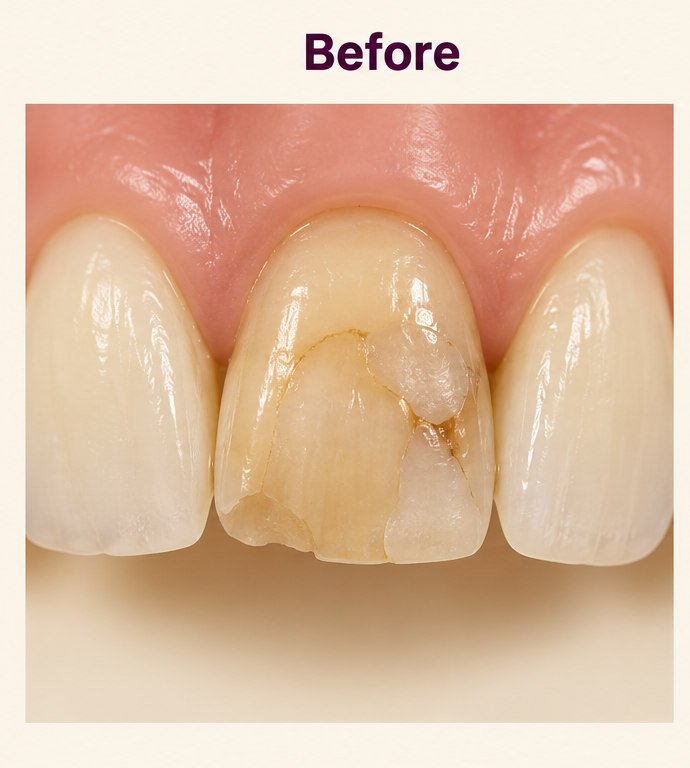
A veneer covers the front surface of a tooth to change its appearance. Veneers may be considered for selected teeth affected by discolouration, chips, wear or differences in shape. We’ll assess your teeth and discuss whether a simpler option could meet your aims.
Understanding your options
Laboratory-made veneers can use porcelain or other ceramic materials, such as Emax. Composite can also be used to change the front surface of a tooth. The material and amount of preparation depend on the tooth, your bite and the intended result.
Minimal-preparation or no-preparation veneers are suitable only for selected teeth. We’ll explain how much tooth tissue would need removing and what that means for future care.
What treatment involves
- Plan the appearance. We discuss the shade and shape you want, examine your teeth and agree the treatment plan.
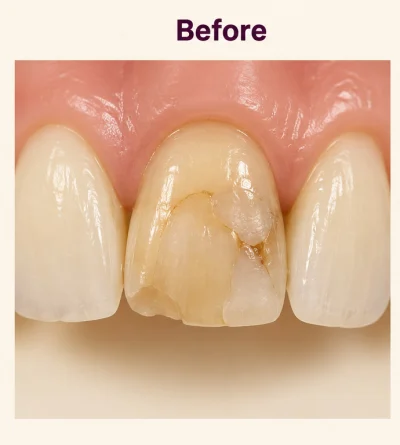
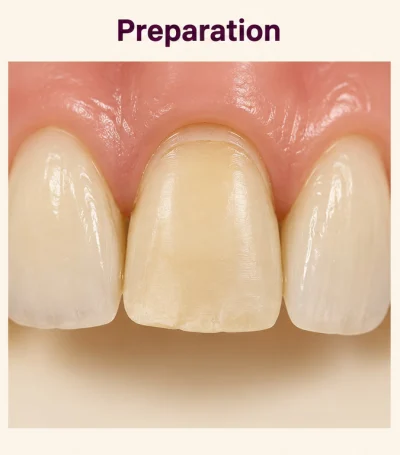
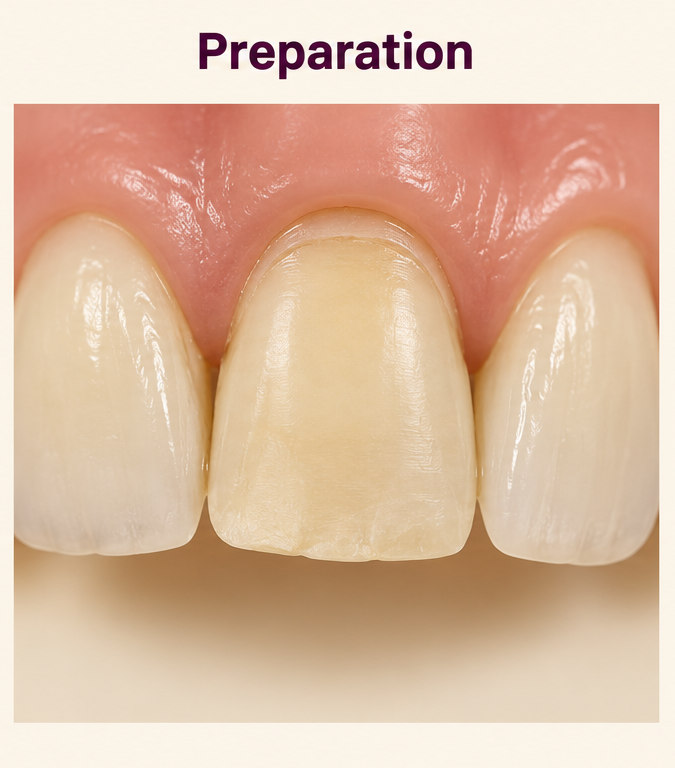
Illustrative model · View larger image - Prepare and record. Where needed, the teeth are prepared and impressions are taken for the laboratory. Temporary coverings may be needed.
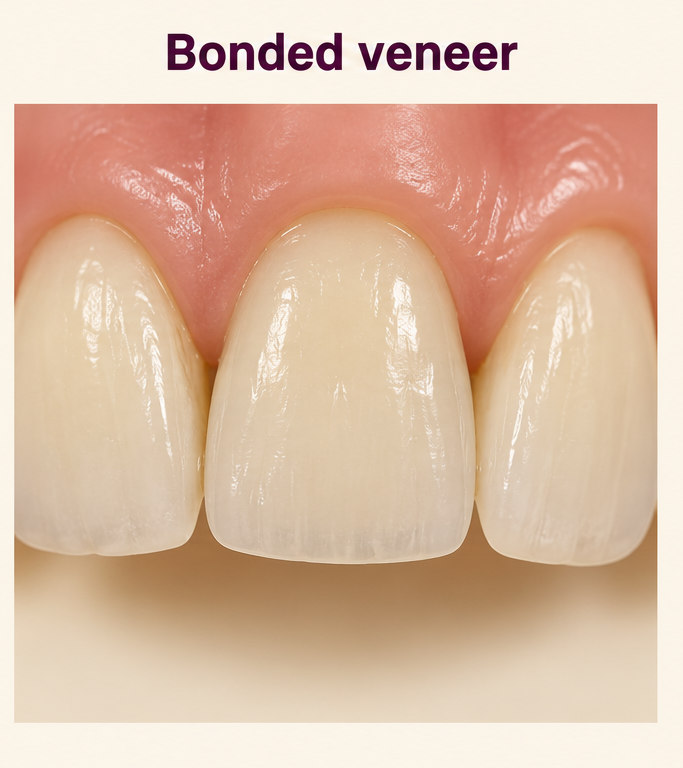
Illustrative model · View larger image - Try in and fit. We check the fit, appearance and bite before bonding the final veneers.
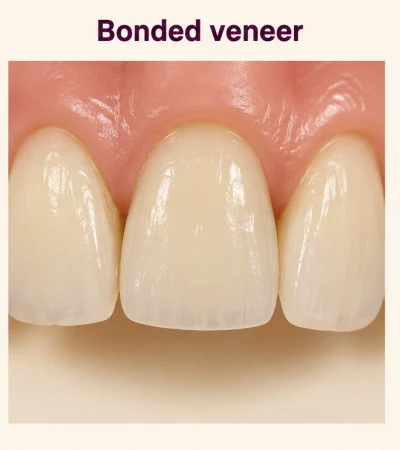
Illustrative model · View larger image
Maintenance and alternatives
Veneers need careful cleaning and regular review. They can chip, loosen or need replacing, and tooth preparation is usually irreversible. We’ll discuss the expected maintenance before you decide.
Alternatives may include composite bonding, tooth whitening or aligners, depending on the concern.
Veneer fees
| Veneer Type | Price |
|---|---|
| Porcelain veneers | from £693 |
| Emax veneers | from £842 |
| Laboratory-made composite veneers | from £645 |
| Zirconia veneers | from £745 |
| No-preparation or minimally invasive veneers | from £848 |
For direct composite veneers, see our composite bonding fees. The appropriate material and treatment are agreed after assessment. Please ask for a written estimate for your teeth.
Clinically reviewed by Dr Robert Zabihi · .