
What is gum disease?
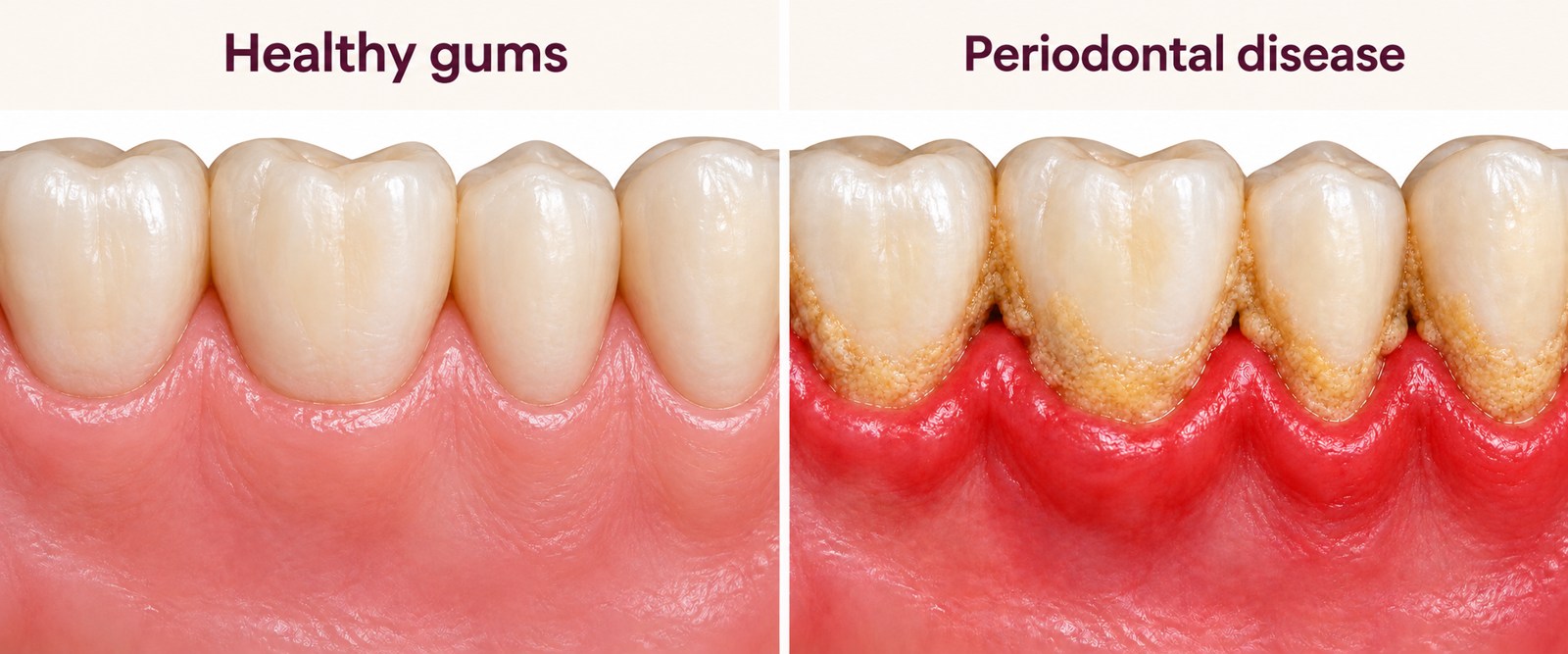
Gum disease develops when plaque builds up around the teeth and irritates the gums. Early inflammation is called gingivitis. More advanced disease, called periodontitis, can damage the tissues and bone supporting the teeth.
Bleeding gums, persistent bad breath, gum recession or loose teeth are reasons to arrange an examination. Gum disease can also develop with little discomfort.
Checking your gums
We assess your gum health, cleaning routine and risk factors. Measurements around the teeth and X-rays may be needed. The findings help us distinguish routine hygiene needs from periodontal treatment.
Your treatment options
Routine hygiene care
Professional cleaning removes deposits that are difficult to reach at home. We also show you how to brush and clean between teeth more effectively.
Periodontal treatment
If deeper cleaning is needed, we clean beneath the gumline, sometimes over several appointments. Local anaesthetic may be used. More complex cases may need specialist assessment.
Treatment works alongside daily home care. Smoking and conditions such as diabetes can affect gum health, so these are considered in your care plan.
Keeping your gums healthy
Follow your tailored cleaning advice and return for the reviews we recommend. We reassess your gums after treatment and agree an ongoing maintenance schedule. Dental plans can help spread the cost of included routine visits; periodontal treatment may involve separate charges.
Hygiene & periodontal fees
Hygiene appointment: £80.
Periodontal therapy: from £150.
The number and type of appointments depend on your assessment. See our full fee guide or ask for an individual estimate.
Clinically reviewed by Dr Robert Zabihi · .